Your dog's safety is the #1 reason Delaware homeowners call us about fencing. Whether you have a 10-pound escape artist or a 100-pound gentle giant, the right fence makes all the difference between peace of mind and a panicked search through the neighborhood.
Here's how to choose the right fence for your pet — based on your dog's size, behavior, and your budget.
What Makes a Good Dog Fence?
Not all fences are created equal when it comes to containing dogs. Before choosing a material, think about your dog's specific behaviors:
- Jumpers: Need a fence at least 6 feet tall — some athletic breeds can clear a 4-foot fence easily
- Diggers: Need a fence with no gaps at the bottom, ideally with a ground board or buried base
- Reactive dogs (barkers): Need a solid fence that blocks their view — if they can see it, they'll bark at it
- Large/powerful breeds: Need durable materials that can withstand impact — a 90-pound dog hitting a weak fence panel at full speed will find the weak spot
- Small dogs: Need tight spacing between pickets or boards — small breeds can squeeze through surprisingly narrow gaps
Wood Privacy Fencing for Dogs
Best for: Reactive dogs, barkers, dogs that get overstimulated by seeing other animals or people.
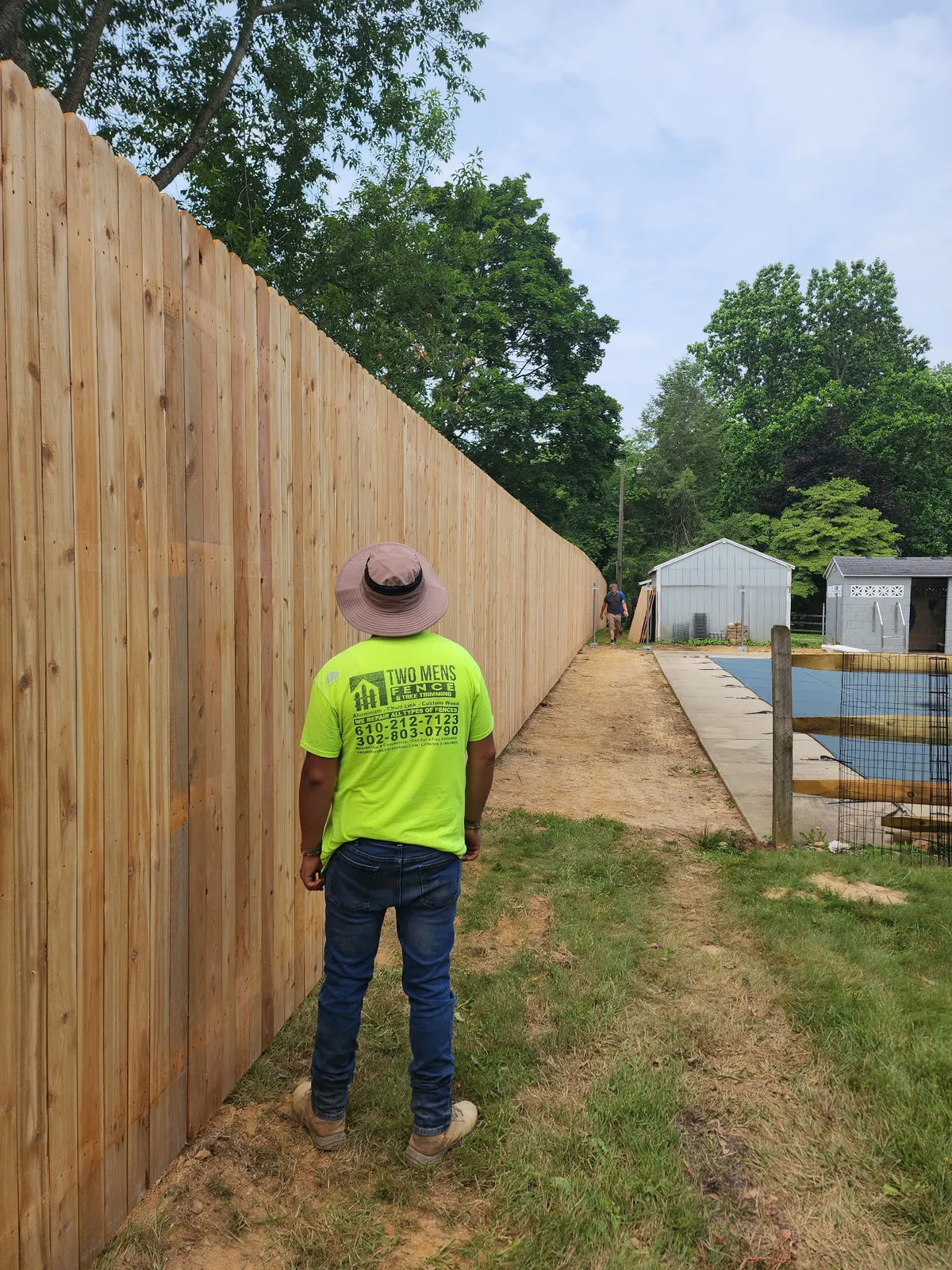
A 6-foot wood privacy fence is one of the most popular choices for dog owners. The solid boards create a full visual barrier, which calms reactive dogs and prevents them from fence-running or barking at every passerby.
Pros:
- Complete visual barrier — your dog can't see triggers on the other side
- 6-foot height is standard, which contains most breeds
- Affordable compared to vinyl
- Can be built with minimal ground gaps
Watch out for:
- Boards can warp over time, creating gaps that small dogs exploit
- Bottom gaps can develop as the ground settles or erodes
- Solution: Add a kickboard (ground board) along the bottom — a horizontal board that sits flush with the ground, eliminating gaps
Vinyl Privacy Fencing for Dogs
Best for: Dog owners who want zero maintenance and long-term durability.
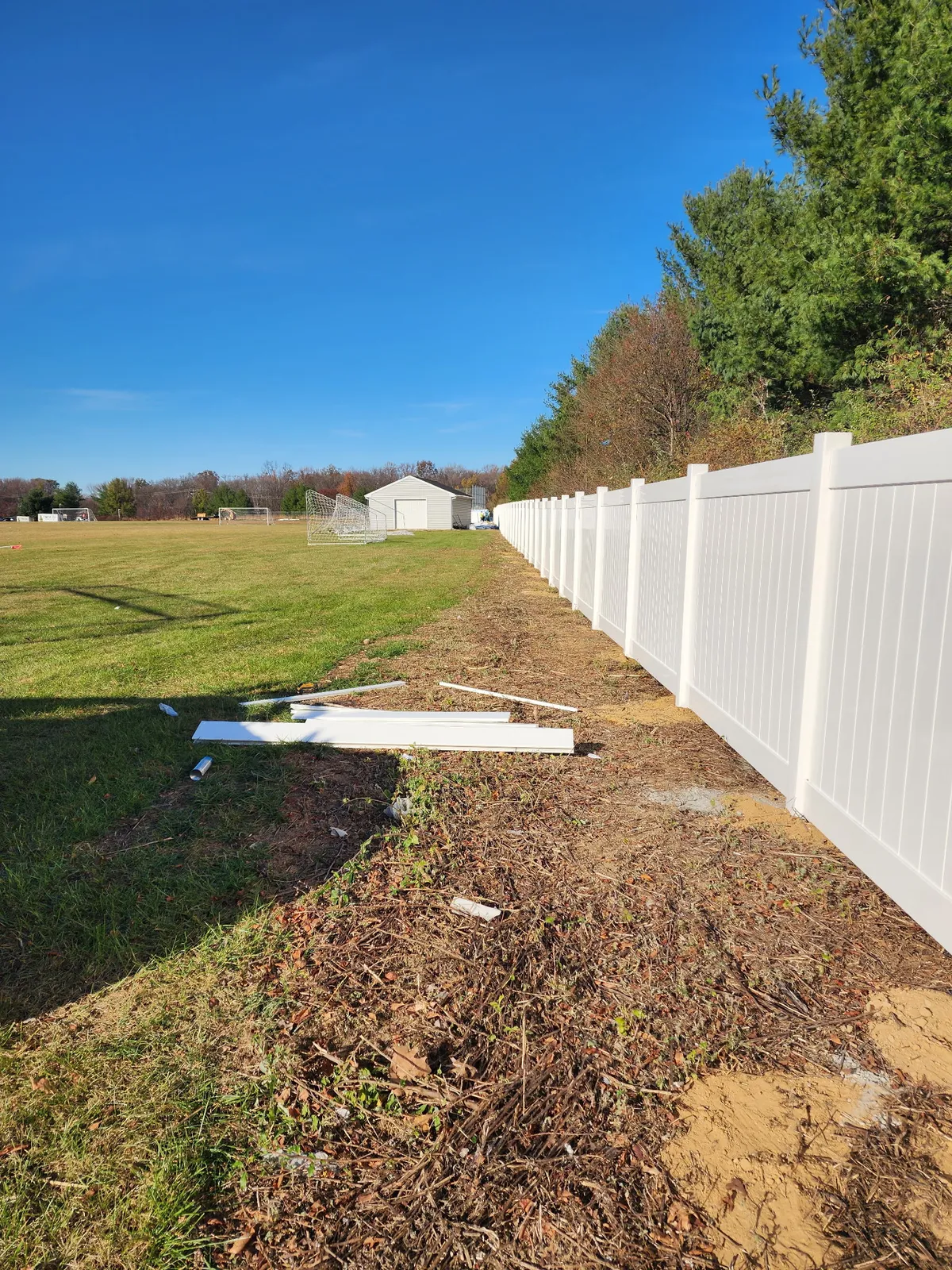
Vinyl privacy fencing offers the same visual barrier benefits as wood, with some significant advantages for pet owners:
- Smooth surface — no splinters if your dog rubs against or chews the fence
- Won't warp, rot, or create gaps over time the way wood can
- No staining or sealing needed — spend your weekends at the dog park instead
- Consistent panel dimensions mean uniform gaps (or no gaps) along the entire fence line
Vinyl costs more upfront than wood, but for dog owners who want a "set it and forget it" solution, it's the best long-term investment.
Chain Link Fencing for Dogs
Best for: Large yards, multiple dogs, budget-conscious pet owners with well-trained dogs.
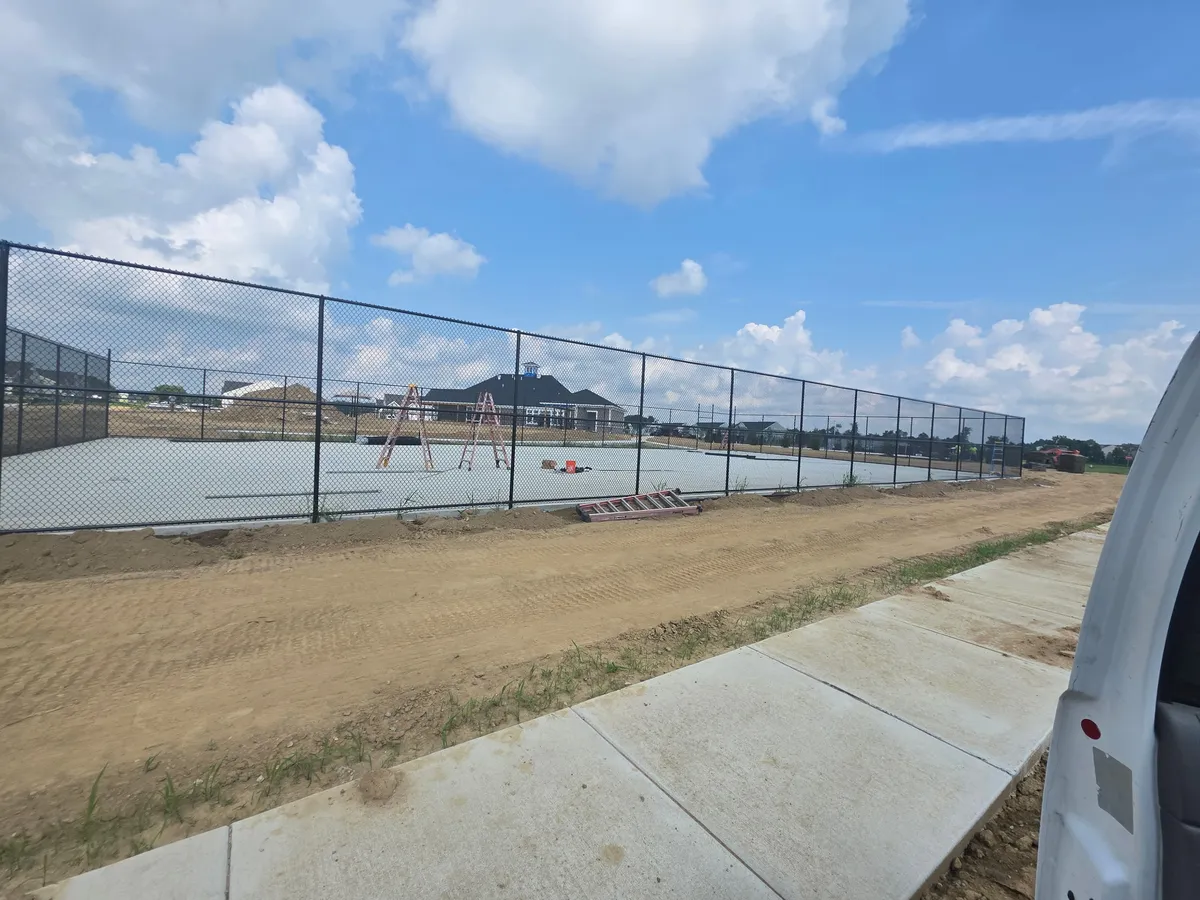
Chain link fencing is the most affordable fencing option, and it works well for many dog owners:
- Available in heights from 4 feet to 8 feet — plenty of options for jumpers
- Extremely durable — even large dogs can't damage the mesh
- Great for large properties where the cost of wood or vinyl would be prohibitive
- Can add privacy slats for dogs that are reactive to visual stimulation
- Vinyl-coated chain link (black or green) looks better than standard galvanized
The downside: Dogs can see through chain link, which means reactive dogs will still bark at everything. If your dog is a barker, consider adding privacy slats or choosing a solid fence material instead.
Aluminum Fencing for Dogs
Best for: Front yards where aesthetics matter, large breeds only.
Aluminum ornamental fencing looks beautiful, but it has limitations for pet owners:
- Gaps between pickets — NOT recommended for small dogs that can squeeze through
- Dogs can see through the fence, which triggers reactive behavior
- Works well for large breeds (60+ lbs) in front yard applications where you want curb appeal
- Some aluminum fence styles have closer picket spacing designed for pet containment — ask us about puppy-panel options
Our Recommendation by Dog Type
| Dog Type | Best Fence | Recommended Height |
|---|---|---|
| Small dogs (under 30 lbs) | Vinyl or wood privacy | 4–5 feet |
| Medium dogs (30–60 lbs) | Wood or vinyl privacy | 5–6 feet |
| Large dogs (60+ lbs) | Wood privacy or chain link | 6 feet |
| Diggers (any size) | Any solid fence + ground board | 5–6 feet |
| Jumpers (any size) | 6ft minimum, no horizontal rails to climb | 6 feet |
| Reactive / barkers | Wood or vinyl privacy (blocks view) | 6 feet |
Dog Fence Add-Ons
Sometimes the fence itself isn't enough — here are add-ons that make any fence more dog-proof:
- Ground boards / kickboards: A horizontal board at the base of the fence that sits flush with the ground. Prevents digging under the fence and eliminates bottom gaps. This is the #1 add-on we recommend for dog owners
- Self-closing gate hardware: Gates that automatically swing shut and latch after someone walks through. This prevents the classic escape scenario — a guest or delivery person leaves the gate open, and your dog bolts. Self-closing hinges and magnetic latches are inexpensive insurance
- Coyote rollers: For extreme jumpers or climbers, a rolling bar mounted along the top of the fence prevents dogs (and coyotes) from getting a grip to pull themselves over. Most common in rural areas of Sussex and Kent County where wildlife is a concern
- Buried wire mesh: For persistent diggers, burying a section of wire mesh or hardware cloth along the base of the fence (extending 12–18 inches into the ground) makes digging nearly impossible
Get a Dog-Friendly Fence Quote
Every dog is different, and every yard is different. Tell us about your dog — breed, size, behavior — and we'll recommend the right fence setup to keep them safe and contained.
We've installed hundreds of dog-friendly fences across Delaware. We know what works and what doesn't.
Call Oscar at (610) 212-7123 or Anna at (302) 803-0790 for a free estimate on a fence that keeps your best friend safe.