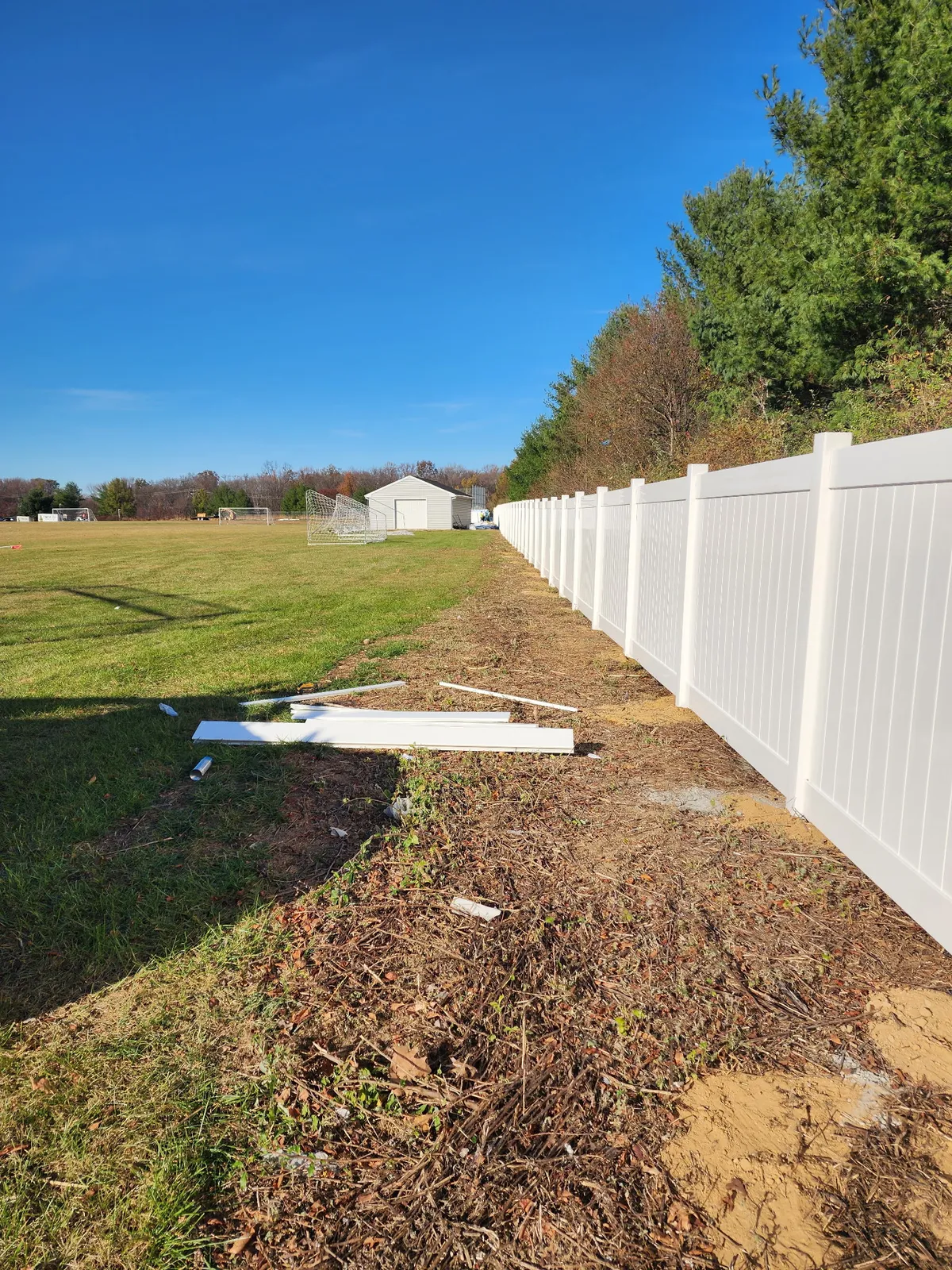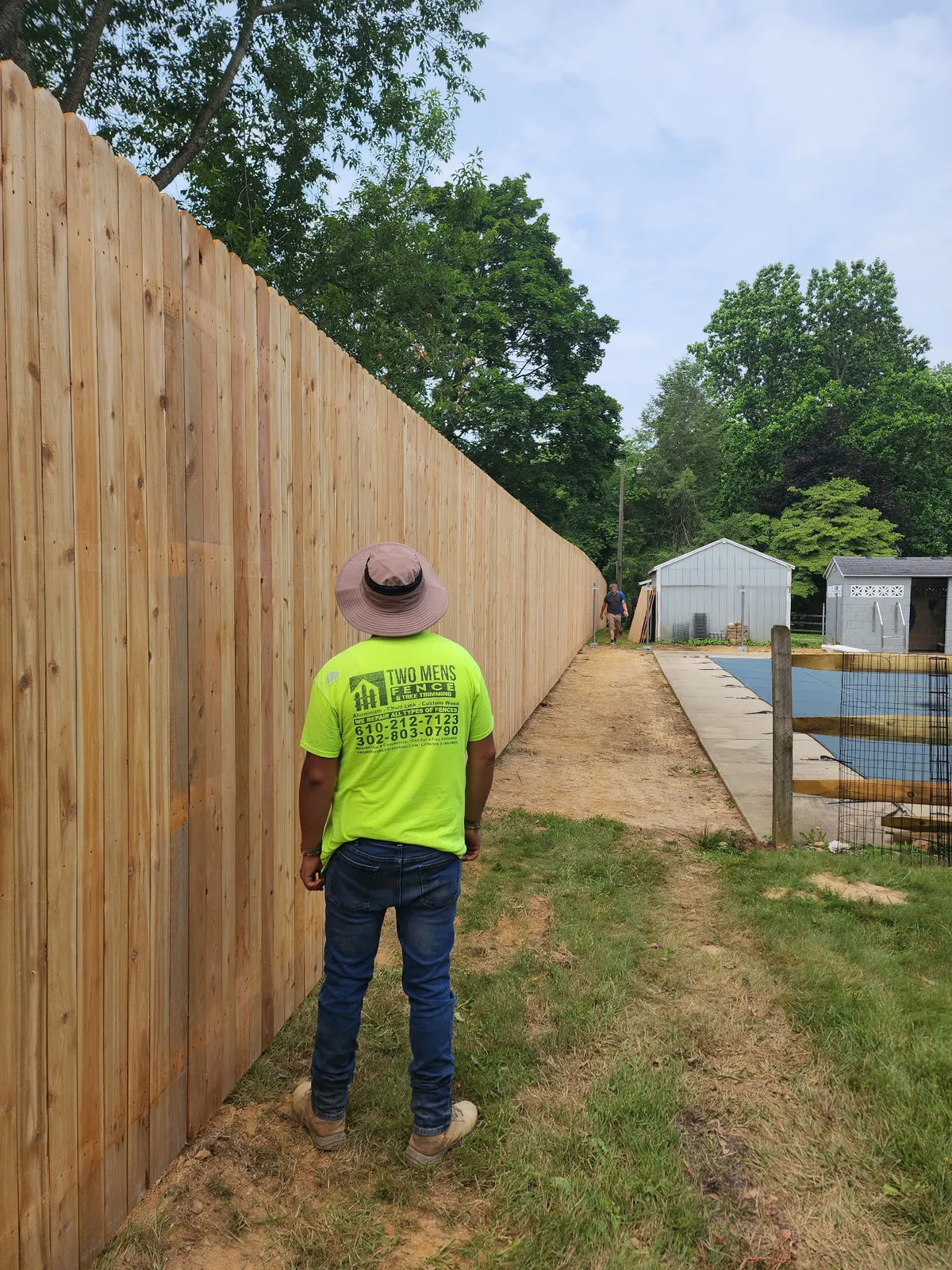
Most residential fence projects move through the same basic steps: estimate, approvals, materials, utility marking, installation, and walkthrough. The exact schedule depends on your yard, fence type, weather, HOA rules, and how quickly decisions are made.
Here is the realistic timeline Delaware homeowners should expect when planning a fence installation.
Week 1: Estimate and Site Visit
The first step is a site visit. We look at the fence line, grade changes, access points, old fence removal, gates, trees, roots, drainage, and any obvious property-line concerns. This is where the project becomes real. A fence that looks simple from the street can change once we see slopes, tight side yards, buried obstacles, or tricky gate locations.
After the visit, you should receive a written estimate that explains the material, height, approximate footage, gates, removal if needed, and what is included. If the estimate is vague, slow down. A real fence quote should be clear enough that you know what you are buying.
Week 1–2: HOA and Permit Questions
Some projects can move quickly. Others need approval first. If your neighborhood has an HOA, the HOA approval process is separate from any county or city permit. Do not assume one approval covers the other.
If you are unsure whether your fence needs a permit, start with our guide: Do I Need a Permit for a Fence in Delaware?. Requirements can depend on location, height, corner lots, pool barriers, and the type of work being done.
HOA approvals can take a few days or several weeks depending on the association. Many require a plot plan, material spec, color, height, and style photo before they approve the work. The fastest projects are the ones where the homeowner gathers HOA documents early.
Week 2–3: Material Ordering
Once the estimate is approved and any required paperwork is in motion, materials can be scheduled. Wood and chain link are often easier to source quickly. Vinyl can take longer, especially for specific colors, styles, gate sizes, or matching an existing fence line.
Custom gates, specialty hardware, aluminum styles, and nonstandard layouts can also stretch the timeline. This is normal. It is better to wait for the right materials than rush the job with mismatched parts.
Before Installation: Miss Utility 811
Before digging, underground utilities need to be marked. In Delaware, Miss Utility / 811 marking is required before excavation. This usually takes a few business days, and it protects everyone from hitting buried gas, electric, cable, water, or communication lines.
Utility marking does not mark private lines like some irrigation, landscape lighting, or homeowner-installed electric. If you know about private lines in the yard, tell the crew before install day.
Install Day: What Happens
Most residential fences are installed in 1–3 days once materials are ready and utilities are marked. Smaller straight runs can be faster. Large yards, tear-outs, slopes, rocky soil, custom gates, or complex layouts can take longer.
On installation day, the crew confirms the layout, sets posts, builds or installs panels, hangs gates, checks alignment, and cleans up the work area. Good communication matters here. If a gate swing, corner, or transition needs to change, it should be discussed before everything is locked in.
What Can Stretch the Timeline?
- Weather: heavy rain, frozen ground, high wind, and saturated soil can delay work.
- HOA approval: many delays happen before the crew ever starts.
- Materials: vinyl, aluminum, and custom gates can take longer than basic wood.
- Site conditions: roots, slopes, rocks, old concrete, and tight access all add time.
- Design changes: changing height, style, or gates after approval can restart parts of the process.
How to Keep the Project Moving
The easiest way to avoid delays is to make decisions early. Know the fence type, height, gate locations, and whether the old fence is being removed before materials are ordered. If an HOA is involved, submit the paperwork as soon as you have the estimate and material details.
It also helps to clear the fence line before installation. Move furniture, toys, firewood, planters, dog equipment, and anything attached to the old fence. If there are locked gates or pets in the yard, plan access with the crew ahead of time. Small prep steps can save hours on build day.
One more timing note: scheduling is easier when the estimate is approved before the busy season rush. Spring and early summer fill quickly because everyone wants the yard ready for kids, dogs, pools, and cookouts. If you know you want a fence, do not wait until the week before you need it finished.
Final Walkthrough and Warranty
After the fence is built, walk the project with the installer. Check gate operation, latch placement, post alignment, cleanup, and any special requests from the estimate. This is also when you should ask maintenance questions for your specific material.
A good fence project should end with a clear walkthrough, not a crew disappearing without explanation. If you want to get on the schedule, book a free estimate and we will walk you through the next steps.