Choosing a fence contractor is not just about finding the lowest price. A fence is a permanent exterior improvement. If the posts are shallow, the gates sag, the material is cheap, or the layout is wrong, you will feel that mistake every time you open the gate or look across the yard.
Use this checklist before hiring a fence contractor in Delaware.
1. Confirm They Are a Real Business
Start with the basics. Ask for the company name, Delaware business license information, contact details, and proof that they actually do fence work in your area. A real contractor should not get defensive when you ask basic business questions.
You do not need a complicated investigation. You just need to know who you are hiring, how to reach them, and whether they are operating like a legitimate company instead of a weekend side job with no accountability.
2. Ask for Insurance Certificates
Ask for general liability insurance and workers' compensation information. Do not accept “we are covered” as the full answer. A legitimate contractor should be able to provide certificates or explain coverage clearly.
Insurance matters because fence work involves digging, tools, vehicles, heavy materials, and crews on your property. If something goes wrong, you want the contractor's business coverage in place.
3. Look at Recent Local Work
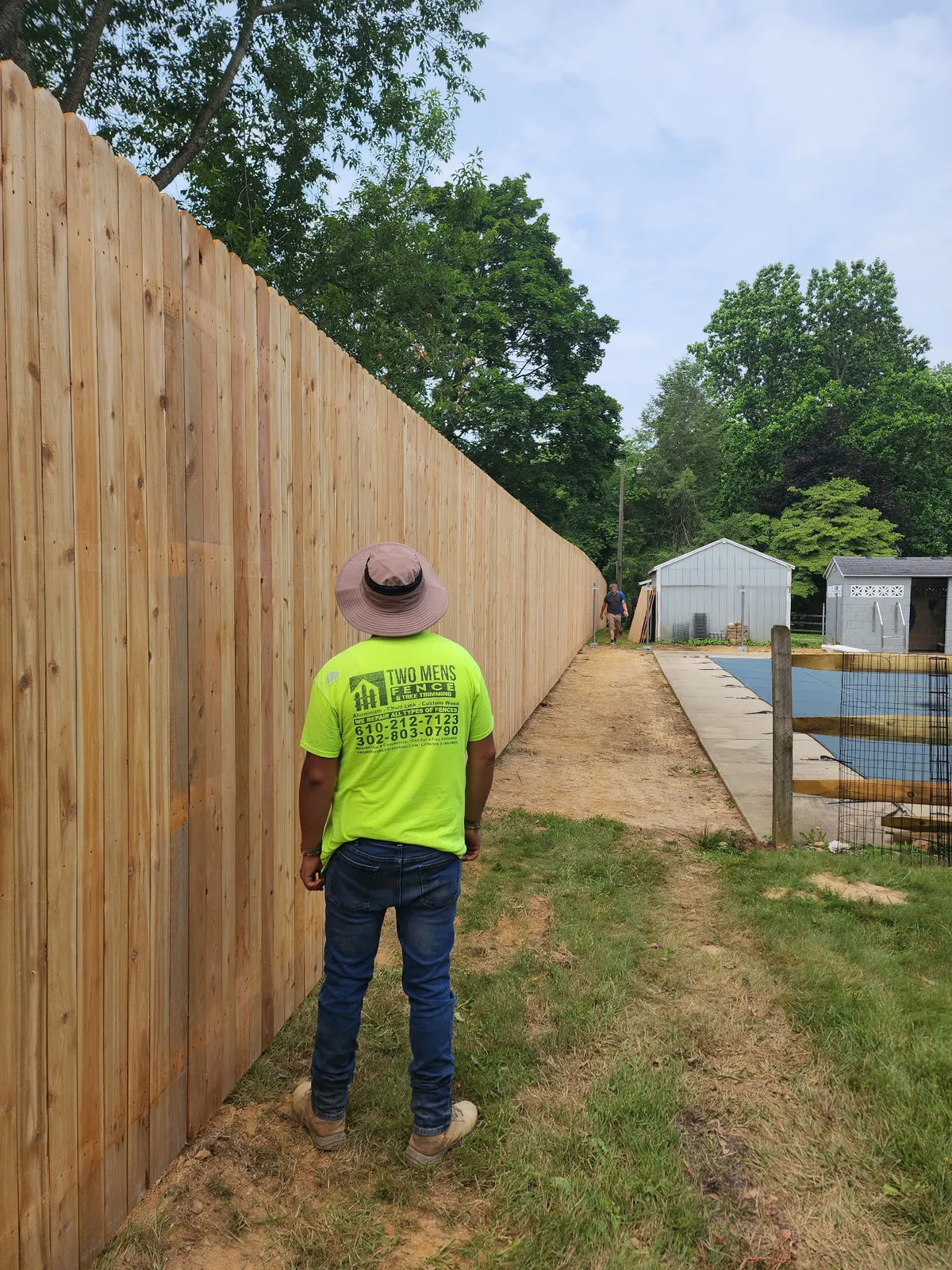
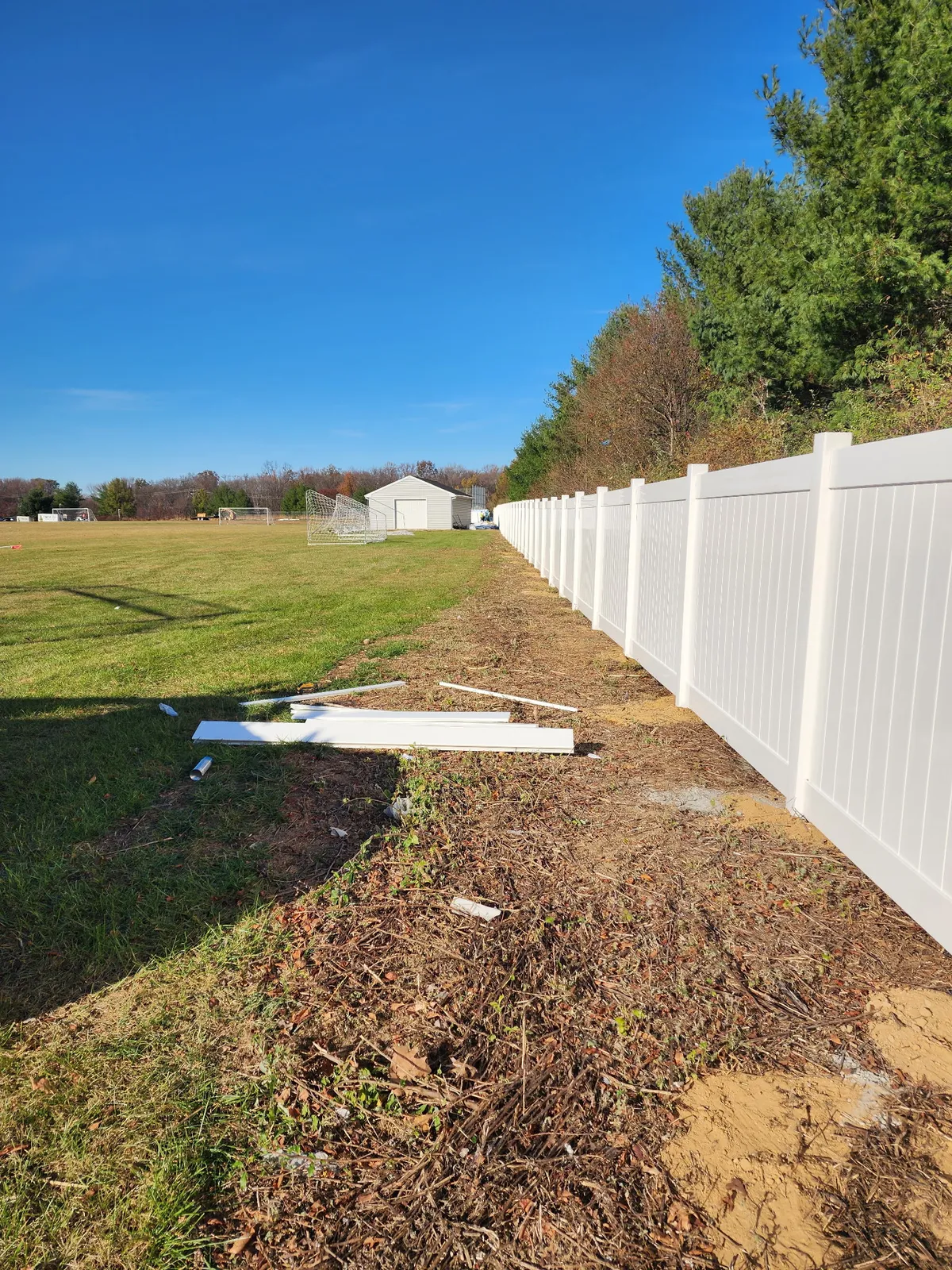
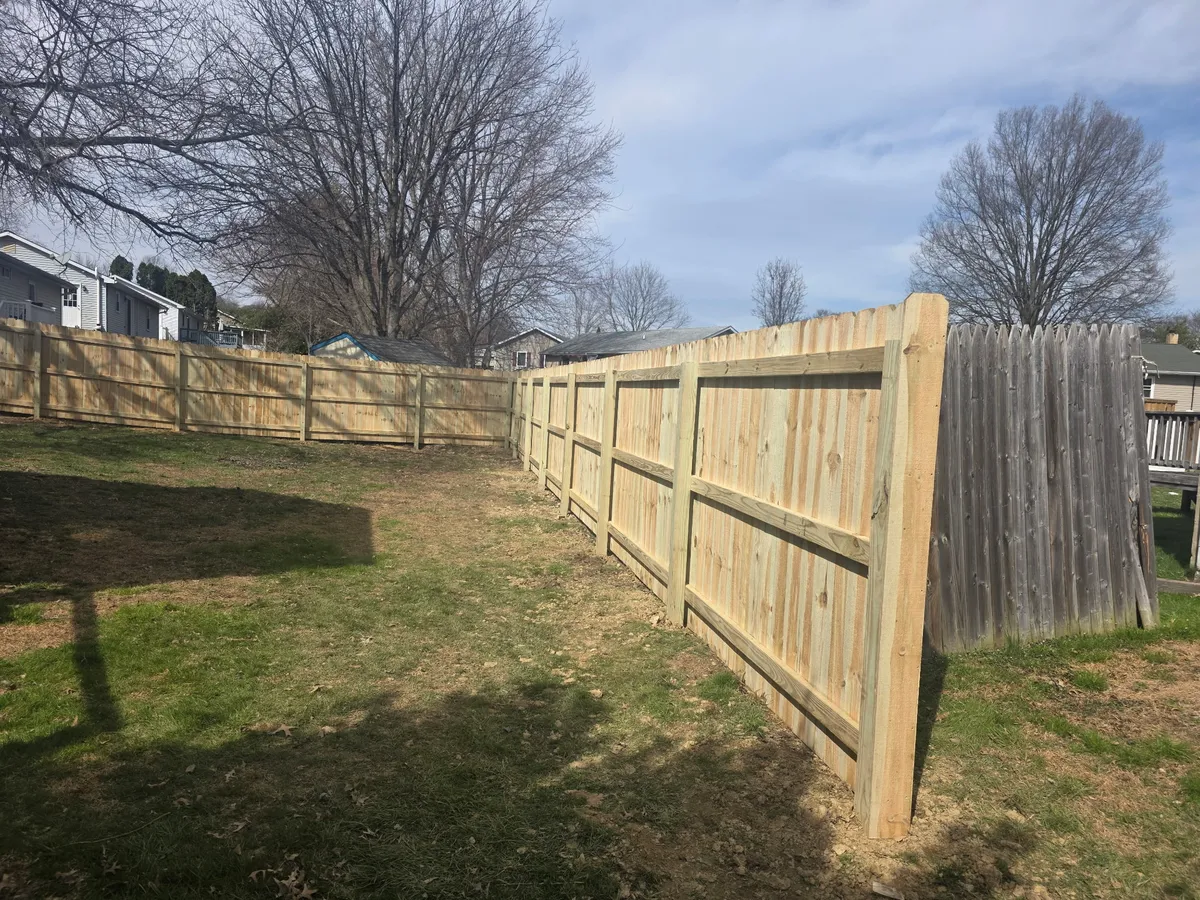
References are useful, but recent local work is better. Ask to see photos of fences similar to yours: wood privacy, vinyl privacy, aluminum, chain link, pool fencing, gates, or repairs. A contractor who installs in Delaware regularly should have real examples.
If you are comparing materials, look at our wood fencing and vinyl fencing services to understand the differences before the estimate.
4. Get a Real Written Estimate
A proper fence estimate should explain what is included. It should not be a single number texted with no details. At minimum, the estimate should cover:
- Fence material and grade
- Approximate linear footage
- Fence height and style
- Number, size, and type of gates
- Post depth and whether concrete is included
- Old fence removal if needed
- Timeline or scheduling expectations
- Payment schedule
- Warranty or workmanship coverage
Details protect both sides. They also make it easier to compare quotes fairly. One contractor may look cheaper because they left out removal, gate hardware, concrete, or a section of fence.
5. Watch for Red Flags
Some warning signs should make you slow down immediately:
- Large cash deposit with no written agreement
- No business name or changing company names
- No proof of insurance
- Pressure to decide the same day
- “Leftover materials” door-knockers offering a too-good-to-be-true price
- No clear material grade or fence height
- No explanation of gates, posts, or layout
A low price is not automatically bad. But a low price with vague details usually means something is missing.
6. Ask Better Questions
Before you sign, ask practical questions:
- How deep do you set posts?
- Do you use concrete on the posts?
- Who handles Miss Utility / 811?
- How long will installation take?
- What happens if the ground is rocky or sloped?
- What warranty do you provide?
- Who will be on site during installation?
The answers tell you how the contractor thinks. Good installers explain the process clearly because they have done it many times.
Compare Quotes Line by Line
When you collect two or three quotes, compare the details instead of only the final number. One estimate may include removal of the old fence, heavier posts, better gate hardware, and concrete. Another may leave those items vague or list them as extra charges after the job starts.
Ask each contractor what could change the price. Rocky soil, hidden concrete, major grade changes, long material carries, or extra tear-out can affect the final scope. A good contractor will explain those possibilities before work begins, not surprise you after the yard is already torn up.
Also pay attention to communication. If a contractor is hard to reach before you pay them, they will probably be harder to reach after the deposit is collected. You want someone who answers questions clearly, shows up when scheduled, and explains changes before making them.
A fence is too visible and expensive to gamble on a vague handshake. Get the scope in writing, understand the material, and choose the crew that gives you confidence before the first post hole is dug.
7. Choose the Best Fit, Not Just the Cheapest
The right contractor gives you a clear plan, fair pricing, quality materials, and confidence that the fence will be installed correctly. The cheapest contractor may still be the right one, but only if the details, insurance, references, and workmanship all check out.
If you want a straightforward estimate from a local crew, contact TWO MEN Fence & Construction. We will walk the property, explain your options, and give you a written quote you can actually compare.