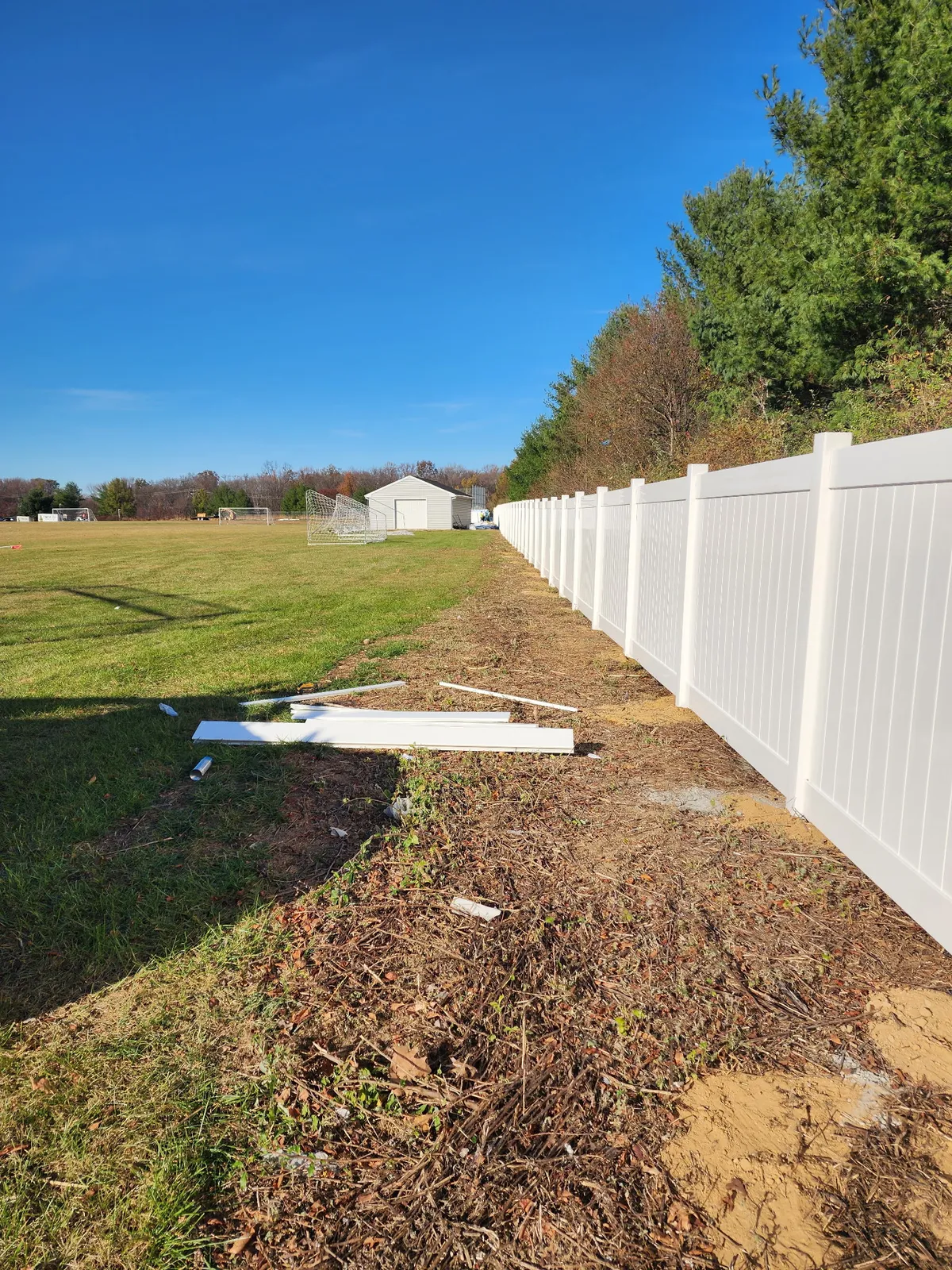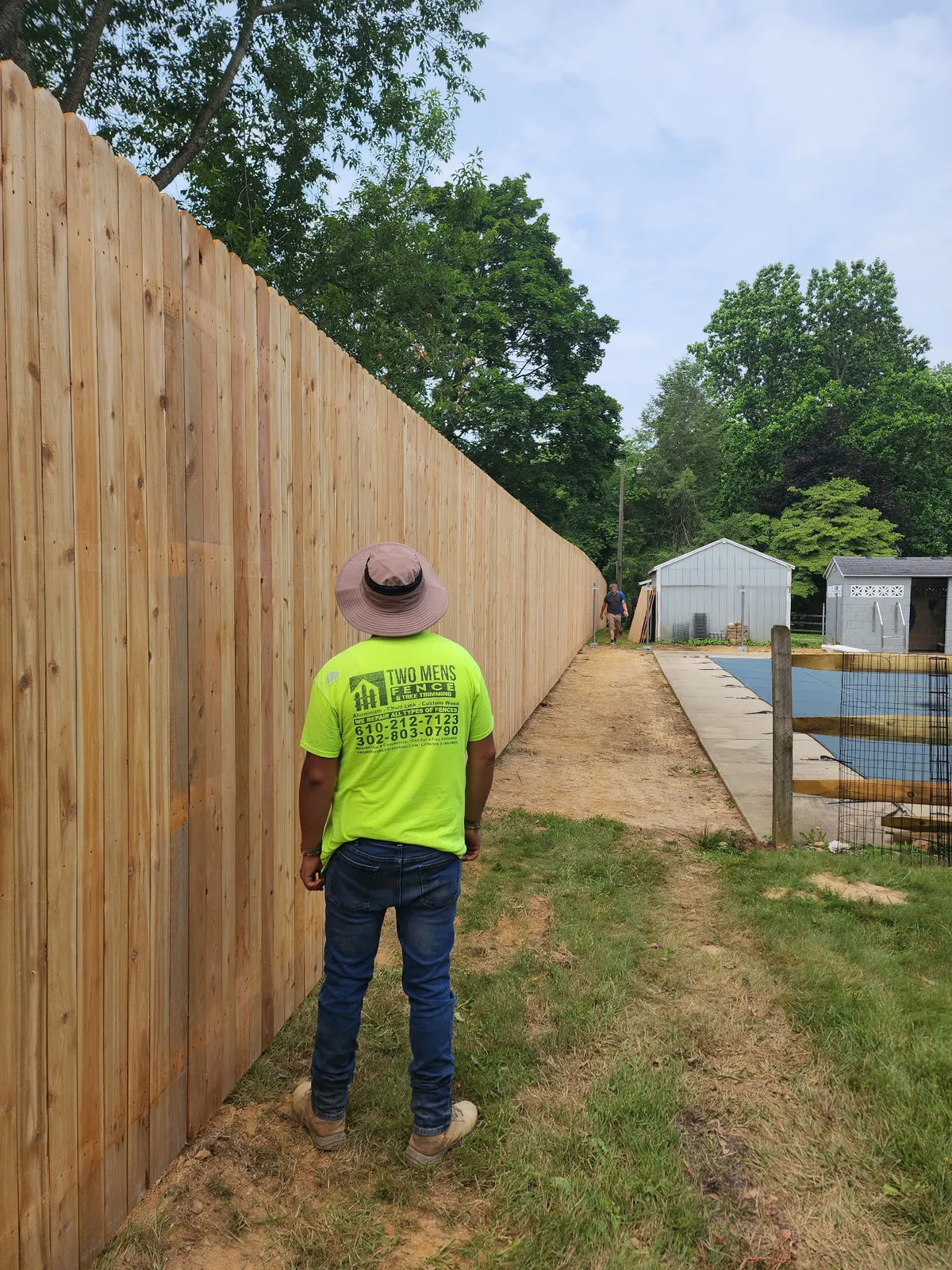
If you're a Delaware homeowner considering a privacy fence, you're making one of the smartest investments in your property. A well-built privacy fence gives you a secluded backyard, keeps kids and pets safe, blocks noise and wind, and adds measurable value to your home. But privacy fence installation isn't something you want to figure out as you go — the material you choose, the contractor you hire, and the way the fence is built will determine whether you're happy with the result for the next twenty years.
At TWO MEN Fence & Construction, we've installed hundreds of privacy fences across Delaware and Pennsylvania. Here's what every homeowner should know before breaking ground — including real costs for our area, the wood vs vinyl decision, the installation process step by step, and how to keep your fence looking great through Delaware's humid summers and freeze-thaw winters.
Privacy Fence Cost in Delaware: What You'll Actually Pay
The cost of privacy fence installation in Delaware depends on three main factors: the material, the linear footage, and site conditions. Here's what you can expect based on a standard 6-foot-tall privacy fence as of 2026:
| Material | Cost Per Linear Foot (Installed) | 150 ft Backyard Estimate |
|---|---|---|
| Pressure-Treated Pine | $25 – $35 | $3,750 – $5,250 |
| Cedar | $30 – $50 | $4,500 – $7,500 |
| Vinyl | $28 – $45 | $4,200 – $6,750 |
| Premium Vinyl (thicker gauge) | $35 – $55 | $5,250 – $8,250 |
These prices include materials, labor, concrete footings, and standard gates. They don't include old fence removal (add $3–$5 per linear foot), difficult terrain like slopes or rocky soil, or permit fees ($50–$150 depending on your municipality).
Delaware's costs are roughly 5–10% above the national average due to our clay-heavy soil in New Castle County and higher labor rates in the Wilmington-Newark metro area. A local company that knows the soil conditions will set posts at the right depth (at least 30 inches, below Delaware's 24-inch frost line) and use the correct amount of concrete for long-term stability.
Learn more on our wood fencing and vinyl fencing service pages.
Wood vs Vinyl Privacy Fence: Which Is Right for Your Delaware Home?
This is the most common question we hear from homeowners in Wilmington, Newark, and Middletown. Both materials create excellent privacy, but they have very different long-term profiles.
Wood Privacy Fence
Pros: Lower upfront cost, natural look that complements landscaping, can be stained or painted any color, individual boards can be replaced if damaged. Cedar is naturally rot-resistant and smells great. Pressure-treated pine is the most affordable option.
Cons: Requires maintenance — staining or sealing every 2–3 years in Delaware's humid climate. Wood expands and contracts with temperature changes, which can loosen fasteners over time. Expect 15–20 years of life with proper care. Termites and wood rot are real concerns in our region if the fence isn't built with ground-contact-rated lumber and proper clearance.
Vinyl Privacy Fence
Pros: Zero maintenance beyond occasional washing. Won't rot, warp, or attract insects. UV-stabilized to resist Delaware's summer sun. Holds up to freeze-thaw cycles without cracking when you choose a quality product. Lasts 30+ years. Available in multiple colors and textures, including wood-grain finishes.
Cons: Higher upfront cost. Can't be painted or stained later — the color you choose is permanent. Repairs are harder; if a section gets damaged, you typically replace the entire panel. Lower-quality vinyl can become brittle over time, which is why we only install commercial-grade vinyl fencing with UV inhibitors.
For most Delaware homeowners, vinyl is the better long-term value if you plan to stay in your home 10+ years and want to set it and forget it. Cedar is the better choice if you want natural beauty, the flexibility to change colors, or have a tighter upfront budget.
What to Expect During Privacy Fence Installation
Knowing what happens during installation helps you prepare your property and your schedule. Here's the step-by-step process when you hire TWO MEN Fence & Construction:
Day 0: Estimate and Planning
We visit your property, walk the fence line with you, take measurements, and discuss material options. You'll receive a written quote with all costs itemized — linear footage, material grade, post depth, concrete, gate count and size, gate hardware, removal of old fencing if needed, and timeline. No surprises, no hidden fees.
Days 1–2: Site Preparation and Layout
Before any digging, we call Miss Utility (811) to mark underground utilities. This is free and required by Delaware law. We then stake out the fence line, mark post locations, and confirm the layout with you. If an old fence needs to come down, we remove and haul it away.
Days 2–4: Post Setting
Posts are the foundation of your fence. We dig holes at least 30 inches deep (below Delaware's frost line), set posts in concrete, and allow the concrete to cure. Posts are set plumb and level, with each one checked for alignment. This is the most important step — shallow posts or poorly mixed concrete are why fences lean after a few winters.
Days 3–5: Panel and Gate Installation
Once posts are set, we install the horizontal rails and vertical pickets or panels. Gates are hung with heavy-duty hardware — ball-bearing hinges for wood and stainless steel for vinyl. We use self-closing hinges on pool fence gates and adjustable hinges on driveway gates to prevent sagging over time.
Final Day: Cleanup and Walkthrough
We remove all debris, excess concrete, and scrap material. We sweep or blow clean the work area. Then we walk the fence line with you, check every gate, and make sure you're satisfied before we leave. Every job comes with our full workmanship warranty.
Additional Costs and Considerations
Gates
Every privacy fence needs at least one gate. A standard walk-through gate adds $200–$500. Double driveway gates run $500–$1,500+. For vinyl fences, gate posts are reinforced with steel or aluminum inserts to prevent sagging over time.
Terrain Challenges
Delaware properties with slopes, tree roots, or rocky soil add complexity. Our crew has experience with the clay-heavy soils in Bear and New Castle, the rocky patches in Hockessin, and the sandy loam closer to the Delaware Bay. We'll discuss any terrain surcharges during the estimate — no surprises after the job starts.
Permits
Most Delaware municipalities require a permit for fences over 4 feet. We'll help you navigate the process in Wilmington, Newark, and throughout New Castle County. Factor $50–$150 into your budget. Read our full guide on Delaware fence permits.
HOA Rules
If you live in an HOA community, check your covenants before choosing a fence style and height. Many communities in Delaware restrict fence height to 4 feet in front yards, require specific materials or colors, or limit where fences can be placed on corner lots. We've worked with dozens of Delaware HOAs and can help you navigate the approval process.
Privacy Fence Maintenance in Delaware's Climate
Delaware's weather — humid summers, rainy springs, and freeze-thaw winters — puts real stress on outdoor structures. Here's how to keep your privacy fence in top shape:
Wood Fence Maintenance
- Clean annually: Use a garden hose and mild detergent. A pressure washer on a low setting can remove mildew, but avoid getting too close — high pressure can damage wood fibers.
- Re-stain or seal every 2–3 years: Delaware's humidity accelerates wood weathering. A quality penetrating stain protects against moisture and UV damage. Don't skip this — an unsealed wood fence in our climate can start showing wear in under five years.
- Keep the bottom edge dry: Make sure soil, mulch, and leaves don't pile up against the bottom of the fence. Wood in constant contact with wet ground will rot, even if it's ground-contact rated.
- Tighten hardware annually: Wood expands and contracts. Check gate hinges, latch screws, and rail brackets each spring.
Vinyl Fence Maintenance
- Wash once a year: A garden hose and mild soap take care of dirt, pollen, and mildew. No pressure washing needed — and no staining, painting, or sealing required.
- Inspect after storms: Heavy wind can loosen post caps or shift panels. A quick visual check after nor'easters or summer thunderstorms catches small issues before they become bigger ones.
- Keep grass trimmers away: String trimmers can scar vinyl surfaces. Maintain a small gap or use a weed barrier along the fence line.
Why Delaware Homeowners Choose TWO MEN Fence & Construction
There are plenty of fence companies in Delaware. Here's why local homeowners keep coming back to us:
- 18+ years of local experience — We know Delaware soil, Delaware weather, and Delaware building codes. We've been doing this since 2008.
- Family-owned and operated — Oscar and Anna personally oversee every project. When you call, you talk to the owners, not a sales rep.
- Licensed & fully insured — General liability and workers' compensation coverage protect you and your property.
- Every job warranted — We stand behind our workmanship. If something's not right, we make it right.
- Written estimates, no pressure — You get a detailed quote with everything itemized. No rush tactics, no hidden fees.
- Clean job sites — We treat your property like our own. We clean up thoroughly at the end of every day and after the job is done.
Frequently Asked Questions
How deep should fence posts be in Delaware?
At least 30 inches, which puts the bottom of the post below Delaware's 24-inch frost line. For gates and corner posts, we go deeper — typically 36 inches — because they bear more structural load. Posts set at the correct depth with proper concrete footings are the difference between a fence that stays straight for decades and one that starts leaning after two winters.
How close to the property line can I build a privacy fence?
In most Delaware municipalities, you can build right up to the property line, but we recommend staying 6–12 inches inside your line. This gives you clear ownership and access for maintenance on both sides. Always confirm your property boundaries before installation — a recent survey is worth the investment if your markers aren't clear.
Will a privacy fence increase my home value?
Yes. A quality privacy fence delivers 50–70% ROI at resale according to most real estate estimates. More importantly, it makes your home more marketable — buyers with kids and pets prioritize a fenced yard. For the full cost picture, see our Delaware fence cost guide.
Can you install a privacy fence in the winter?
Yes. Winter installation is common in Delaware. The ground doesn't freeze deeply here — frost depth is 24 inches — so post-hole digging remains feasible through most of the winter. Winter installs often book faster and may have more scheduling flexibility. The only real delay is if we get sustained sub-freezing temperatures that prevent concrete from curing properly.
What's the best fence height for privacy?
Six feet is the sweet spot for residential privacy in Delaware. It blocks sight lines from neighboring properties while staying within most municipal height limits. We can build up to 8 feet in some areas with a variance, but 6 feet handles the vast majority of privacy needs.
Get a Free Privacy Fence Estimate
The best way to understand your options and the real cost is to have us walk your property. We'll measure the fence line, discuss wood vs vinyl, explain gate placement, and give you a clear written quote — all at no cost and with zero pressure.
Call Oscar at (610) 212-7123 or Anna at (302) 803-0790 to schedule your free estimate today. Or contact us online and we'll get right back to you.
We serve homeowners throughout Wilmington, Newark, Bear, Middletown, Dover, Hockessin, New Castle, and communities across Delaware and southeastern Pennsylvania.